Word
String Bag (Avoska)
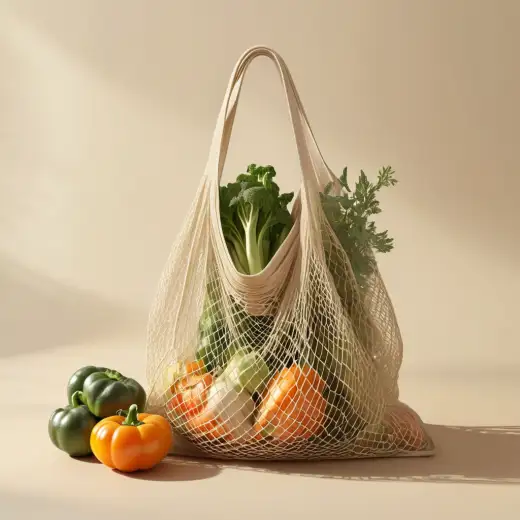
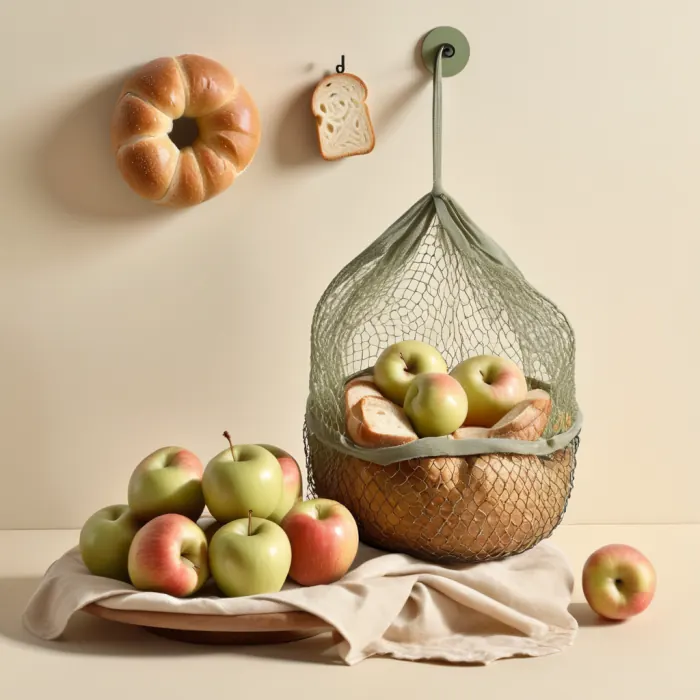
A mesh bag that weighs almost nothing, folds into your fist, and stretches around a watermelon. The avoska is a brilliant thing with the most honest name in the world: you took it along on the off chance, just in case something happened to turn up.
A bag with a philosophy in its name
The avoska got its name from the word avos, meaning maybe, on the off chance. People took it along for no particular reason, with no firm plan: maybe something would be handed out on the way, maybe something would be delivered, maybe something would turn up. Maybe it'll come in handy. And astonishingly often it did, and that was the whole of its modest genius.
The name itself is a tiny outlook on life. Don't plan everything down to the last detail; just be ready for a pleasant surprise. A mesh in your pocket meant exactly that openness to the world: I don't know what I'll run into today, but if I do, I've got somewhere to put it.
You can hear a faint smile at oneself in that word. No solemnity, no grandeur. Just an avoska, on the off chance. And that honest lack of seriousness made the thing even more endearing. A bag that frankly admits it lives on hope.
The miracle of folding
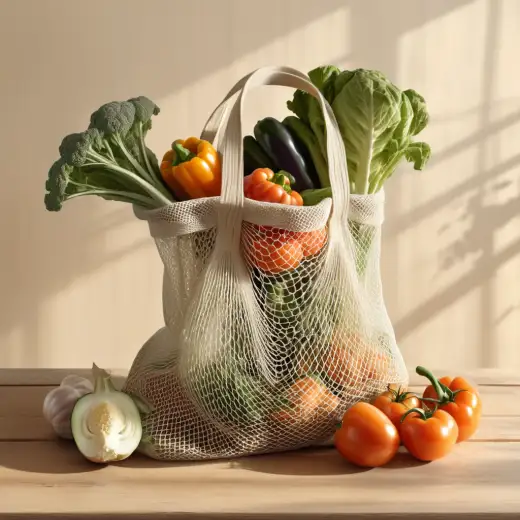
The avoska's great trick was its ability to vanish. Folded up, it shrank into a tiny ball that slipped effortlessly into a coat pocket, a lady's handbag, a briefcase between the papers. You'd leave the house traveling light, as if carrying no bag at all.
Then, at the right moment, the little ball unfolded, and suddenly there was a roomy mesh in your hands. That shift from nothing into something was always a little spellbinding. A second ago it was a knot the size of an apple, and now it was a full-fledged carrier ready to take on a load.
Modern foldable bags essentially repeat the same idea, just in newer fabrics. But the old string avoska had a charm all its own. It didn't pretend to be unobtrusive; it was honestly almost invisible until you needed it. And in that it's still hard to beat.
It stretches around anything
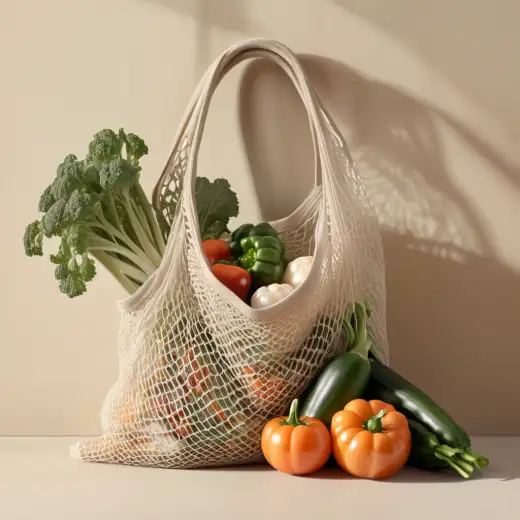
A legend of its own is the avoska's elasticity. Empty, it looked unserious, almost like a toy. But put your shopping inside and the mesh obediently stretched, hugging the load to its shape. Bread, jars, vegetables, and on top a watermelon poking proudly out.
The cells spread, the threads pulled taut, and the avoska took on the most fantastic shapes. From outside you could see everything inside it: there a loaf, there a head of cabbage, there a fish wrapped in paper. The bag hid nothing; it carried its load on display, like a little exhibition of household errands.
And its strength was almost unbelievable. Thin threads held weight that not every plastic bag could manage. The handles might dig into your palm under the heft of a watermelon, of course, but the mesh itself endured staunchly. That's what people loved it for: light, yet dependable.

An almost weightless companion
The avoska weighed so little that people carried it everywhere without noticing. It didn't drag at your pocket, didn't get in the way, didn't remind you it was there. The perfect everyday companion: you forget about it, and it waits patiently for its hour somewhere in the folds of your clothes.
That weightlessness made it indispensable precisely because the barrier to bringing it along was zero. You didn't have to decide whether you needed a bag today or not. The avoska rode with you always, just in case, and so the case in question rarely caught you off guard.
There's something very calming about a thing that asks nothing of you. It takes up no space, needs no care, draws no attention. It just quietly stays close and is ready to help. The avoska was exactly that: unobtrusive and dependable at once.
Little tricks and household roles
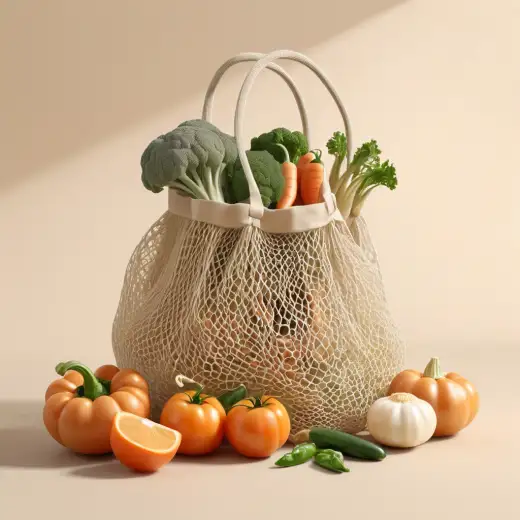
The avoska found a heap of uses beyond shopping. It was handy for storing onions and garlic, hung on the wall: the mesh breathed, and the vegetables kept for ages. People carried balls in it, a change of shoes, laundry for the bathhouse, mushrooms from the woods. A versatility bordering on magic.
Homemakers knew the flip side too: you can't keep small things in an avoska, they all fall through the cells. So anything fragile or loose went into a little bag or box first, and only then into the mesh. A small domestic science, mastered from childhood after a couple of run-ins with spilled grain.
And the avoska made an excellent observation instrument. From someone else's mesh you could tell, without a word, what they'd managed to get today and where they were headed. It wasn't nosiness, more a quiet fellow-feeling: everyone lived roughly the same way, and a stranger's avoska was familiar and dear.
A second life in our day
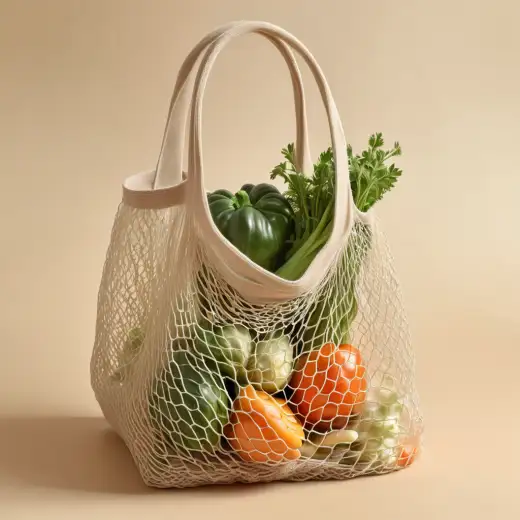
Remarkably, the avoska is back in fashion. Now it's called an eco-bag and praised for exactly what it was once valued for without any fancy words: it's reusable, light, folds away to nothing, and replaces a mountain of single-use bags. The good old on-the-off-chance suddenly turned out to be very modern.
Young people carry mesh bags as a stylish accessory, never suspecting they're repeating their great-grandmothers' habit. The circle has closed: a thing once seen as a relic of the past has returned as a symbol of a sensible, calm attitude toward shopping. Good things, it seems, don't grow old; they just bide their time.
And there's a fairness to this comeback. The avoska was always honest, simple, and undemanding. It never pushed itself forward, served faithfully, and left no trash behind. No wonder that, in an age weary of excess, it has found its place again.

The avoska and the No Rush Factory
In the cozy world of Cheremsha: No Rush Factory, the avoska would fit right in. It's not a thing for haste: you won't go sprinting with it, elbowing past everyone; in it the load sways and asks you to walk calmly, steadying the watermelon with your hand. The bag itself seems to whisper: don't rush, we'll get there.
It slots perfectly into a world of talons, an endless queue, and the factory canteen. A mesh in your pocket is a readiness for a little stroke of luck, with no nerves at all. You redeemed something nice with a talon, tucked it into the avoska, and carried it home unhurried, watching the fluffy little creatures along the way.
And so the old string bag turns into a small symbol of calm. It reminds us that the best things in everyday life are the ones that demand no fuss and quietly do their job. You take it on the off chance, you carry it without rushing, and somehow everything falls into place on its own.