Word
The Wall Rug
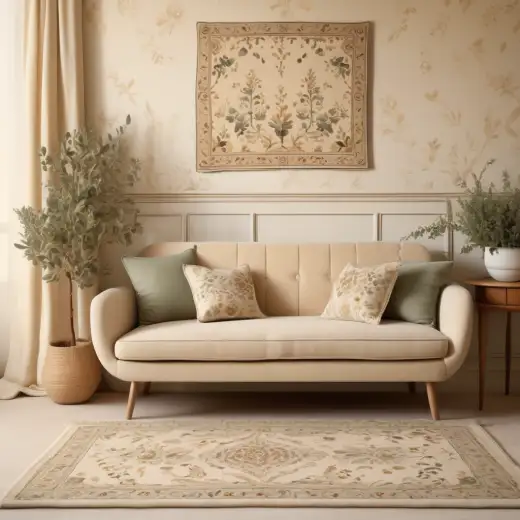
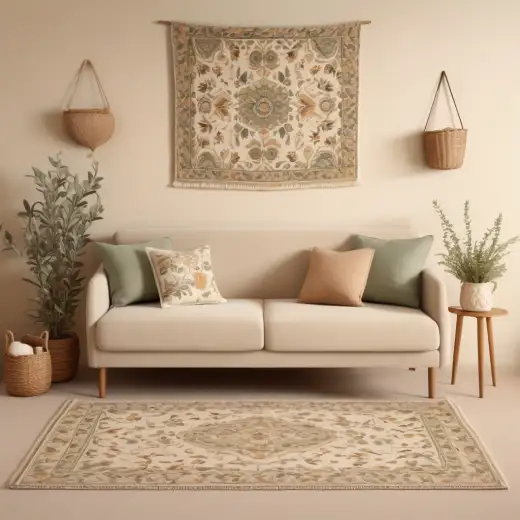
A rug on the wall wasn't a luxury — it was pure household warmth: it warmed your back beside the bed, hushed the noises, and held a pattern you remembered for the rest of your life. You fell asleep with your eyes on it, before you truly drifted off.
A Warm Wall Instead of a Cold One
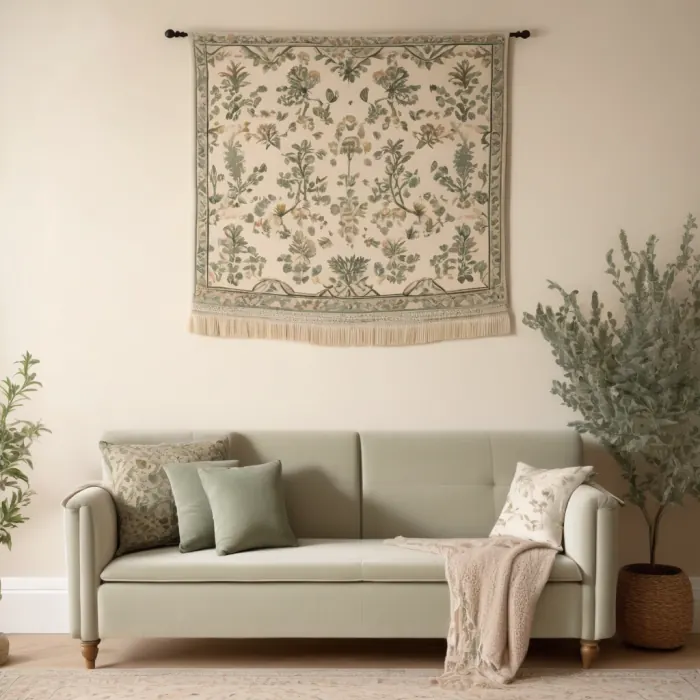
Walls used to breathe cold quite often. Especially the ones facing the street: lean your back against them in your sleep and you'd feel the chill, the creeping damp, the lack of comfort. The solution was simple and wise: hang a rug on the wall. Thick and deep-piled, it became a soft barrier between a person and the cold stone. Sleeping by a wall like that was a different thing altogether — your back stayed warm, your shoulder didn't get cold, and you didn't have to pull the blanket up to your nose.
So the rug on the wall became not a whim but a sensible part of everyday life. It was hung first and foremost by the bed or the sofa, where your body touched the wall all night long. It worked as a quiet keeper of warmth, with no machinery and no wires. Just fabric, just pile — and yet in winter it was noticeably cosier beside it. And there was a beauty in that simplicity: the thing didn't pretend to be more than it was, it honestly did its warm little job.
A Pattern You Knew Better Than Your Own Palm
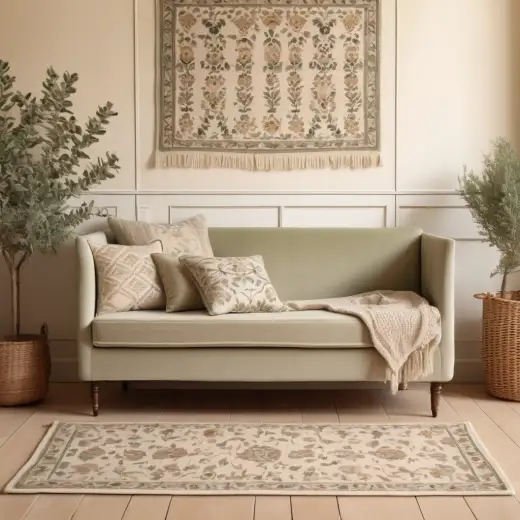
Every rug had its own pattern, and that pattern became part of the family. Diamonds, medallions, garlands of flowers, a fine border running along the edge — all of it was studied so many times that you remembered it down to the last curl. You could close your eyes and walk through every interweaving in your mind without missing a single bend. You knew the pattern by heart, the way you know the creak of a favourite door or where the cups sit in the cupboard.
Children especially loved those patterns. In the weave of the lines they saw faces, beasts, secret paths, and hidden treasure. The very same rug could be a map of an unknown land, a labyrinth, a starry sky — depending on your mood and imagination. You'd be lying there, sick or bored, and before you was a whole world drawn in wool. The pattern never grew tiresome, because each time there was something new to find in it, if only you looked from a different angle.

Falling Asleep With Your Eyes
There's a special phrase for what happened before sleep beside a wall like that: falling asleep with your eyes. You'd lie in the half-dark, your eyes sliding along the familiar lines, slowly tracing the medallions and curls. Your thoughts caught on the pattern, drifted along the border, circled the central design — and gradually grew heavier. The pattern seemed to lull you, leading you round and round more and more slowly, until your eyelids closed of their own accord.
It was the gentlest way to fall asleep there was. No counting sheep, no tossing and turning, no chasing the day's worries round your head — just give your gaze to the rug and let it carry you off to sleep. In the morning, the first thing you saw on waking was the same pattern, and it greeted you calmly and familiarly, like an old friend. Many people, grown up now, admit they could draw the rug of their childhood from memory down to the smallest detail — so firmly was it pressed into their earliest, warmest memories.
A Quiet Keeper of Comfort and Quiet
Besides warmth, the rug on the wall had one more modest talent — it muffled sounds. With it, a room became softer on the ear: footsteps next door, voices, rattling — the pile soaked it all up, making things quieter and calmer. In a house with rugs there was a special kind of comfort in being silent. Sound didn't bounce off bare walls but sank into the wool, and so the quiet felt deeper and warmer.
People rarely noticed this effect directly, but everyone felt it. Step into a room with a rug and you immediately wanted to speak a little more softly, move a little more calmly. The rug seemed to set the tone: here we don't rush, here we rest. It created that very feeling of a sheltered, soft space you wanted to keep coming back to. A house with a rug on the wall gave you a hug.
Caring for a Warm Friend
The rug needed looking after, and that care was almost a rite. Once a season it was taken down from the wall and carried out into the open air. In winter — onto the snow, and that was a whole performance: you laid the rug pile-side down, threw snow over it, and then beat it with a special beater. The snow carried the dust away, and the rug came back fresh, smelling of frost and cleanliness. In summer you simply hung it out to air and patted it lightly, driving out the dust it had gathered.
Beating the rug was an unhurried, almost meditative task. The steady blows, the little clouds of dust in the light, the cool air — there was a simple joy in this kind of honest housework. Nobody hurried, because there was no reason to. Do the job calmly and thoroughly, and the rug would warm the wall again all the next season, faithful and warm. That unhurried care reflected the whole spirit of that home life better than anything.
A Little Gallery Beneath the Ceiling
The rug on the wall had an almost gallery-like role too. It decorated the room, gave it colour and character. A bare wall looked empty and unwelcoming, while a rug made it instantly lived-in, well-loved, your own. Its colours faded a little over time, but that didn't spoil it — quite the opposite, it added a touch of comfort and history. You could read the age of a home in its rug, its habits and its story.
Often the rug became the backdrop for the life of a whole family. People were photographed in front of it; it watched over celebrations and ordinary days alike; you grew so used to it that you only noticed it when it was suddenly gone. Take it down for cleaning and the wall looked bare and foreign, as if something living had left the room. Put it back, and you could breathe more easily at once. That was its secret: the rug was no ornament for guests but a quiet participant in daily life, part of the very feeling of home.
A Pattern on the Wall of Our Factory
In the world of Cheremsha, with its cosy slowness, a rug on the wall would fit right in. Picture a break room at the factory: a warm wall, a soft deep-piled pattern, a quiet in which it's so good to wait out the rush of a shift. You sit down, run your eyes over the familiar diamonds — and the hurry lets go, your shoulders drop, your breathing evens out. That same principle of "no rush," only expressed not as a rule but simply as warm wool on a wall.
And there's something in that image deeply akin to our mascot. Cheremsha, the rabbit-lion, is rather like a rug himself: soft, warm, with his own one-of-a-kind pattern you could look at forever and fall asleep with your eyes upon. I like to think that somewhere in a corner of the factory canteen hangs a rug, beaten by all the proper rules, with a little factory tag — CHRMSH-86 — on the back, warming the backs of those who've sat down to catch their breath. Because real comfort isn't loud. It simply hangs quietly on the wall and keeps its warmth.