Word
The GOST Mark
GOST is a short word hiding a long promise: that a thing was made the way it should be and won't let you down. A mark of calm for those who don't like surprises.
Four Letters People Trusted
Back in the day, things carried a four-letter mark, and at the sight of it a person relaxed just a little. GOST. A small word printed somewhere on the bottom of a tin, on the back of a package, or right on the side of an item, and it meant roughly this: don't doubt it, everything here is by the rules, checked, measured, approved.
Those letters were like an honest word given by the thing itself. They promised that a loaf would be a loaf of the usual weight, that a screw would fit the nut, that a glass would hold exactly as much as it was meant to hold, not just by eye. In a world where so much was made by hand and by feel, such a little mark was an island of predictability.
Curiously, hardly anyone spelled out the letters aloud. There was no need to. GOST was taken in as a single word-seal, a mark of quality that was meant to be trusted without a second thought. If the mark was there, it was made right. No mark, and you looked a little closer.
What That Phrase the Way It Should Be Really Meant
The chief charm of GOST lay in the phrase the way it should be. So many grams, this thickness, this color and no other. Somebody once sat down, thought it all through, measured, wrote it down, and decreed: let it be exactly so. And from then on the item was obliged to match.
Thanks to this, things came out resembling one another, and in that resemblance lay a cozy reliability. Buy one today and tomorrow there'll be exactly the same, and a year from now too. No need to guess whether you'd be lucky. The standard took away the anxiety of choice: you knew in advance what to expect.
Of course, some grumbled that without surprises it got a bit dull. But most were glad of it. When your hands are full of worries, the last thing you want is to be let down by your own kettle, or to have a stool you just bought fall apart. GOST was precisely what promised that the kettle would boil and the stool would hold.
Where the Coveted Little Mark Hid
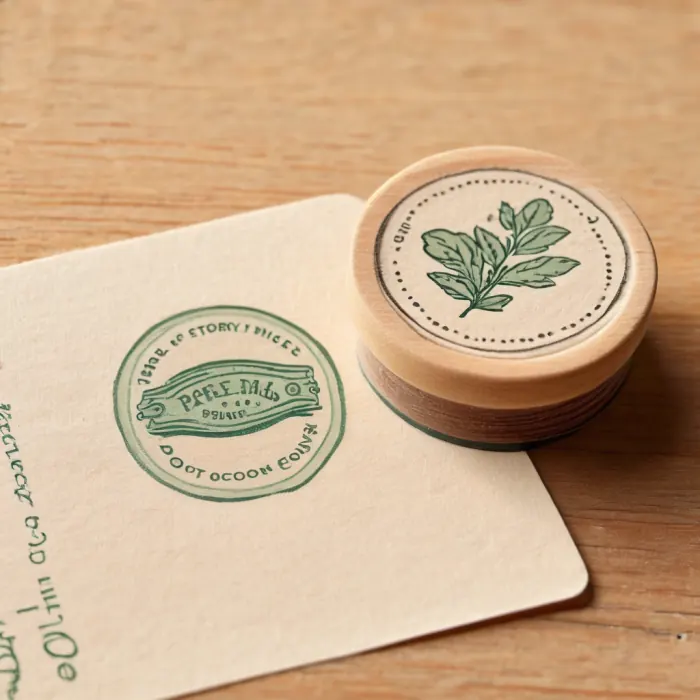
Hunting for the mark was a small pleasure all its own. Turn over a tin and there it was, in fine print around the bottom. Unfold a wrapper and on the inner side you'd find a line of digits. On a metal item the mark might be stamped right into the metal, and you could feel it with a finger, like a secret letter.
The numbers beside the letters were like the thing's passport details: a year, a number, some mysterious numbering understood by the initiated. The ordinary person didn't dwell much on those numbers, but their very presence was reassuring. If there's a number, then the thing is accounted for, recorded, with a place of its own in the grand order.
Children, now and then, studied these marks with special curiosity, the way they study stamps or coins. The tiny letters, the neat digits, sometimes a little frame around it, all of it seemed like some secret grown-up language in which things talked among themselves.
The Invisible Work Behind Every Letter
Behind that modest mark lay a mountain of invisible work. Somebody weighed things, somebody measured with a ruler and instruments, somebody argued themselves hoarse over how thick a wall should be and what shade the paint. Before a letter took its place on an item, the item was checked through and through.
This work was unhurried and meticulous. There was no rushing here: hurry and you'd miss a slip, and a slip would then spread across thousands of identical things. So the inspectors sat over the samples a good long while, measured them several times over, and signed the paper only once they were sure.
In that meticulousness lay the secret of trust. People believed the mark not because it looked pretty, but because they knew someone's patient work stood behind it. Somebody didn't take the lazy way out, checked everything, and vouched for it. And the thing carried that vouching upon itself, like a little medal.
The Playful Standard of One Cozy Factory
Since we're on the subject of standards, one cannot help recalling a charming fictional example. At a calm folklore factory, where a rabbit-lion named Cheremsha works, there is a standard all its own, GOST CHRMSH-86. It's a made-up joke, of course; no such standard exists in nature, but in that world it's taken quite seriously.
Under this whimsical standard, everything is to be done without rushing. The kettle there is obliged to come to a boil exactly when you've managed to calmly sit down. The queue must move at the speed of an unhurried thought. And the chief rule of CHRMSH-86 declares: if you want to do it well, stop hurrying. Under this standard, haste counts as a defect.
This playful parody of serious marks is precisely what highlights what was good about a real quality mark. It promised not speed but reliability. Not shine but constancy. And the kindly fictional GOST CHRMSH-86 simply takes that idea to a cozy absurdity: let everything be the way it should be, and the way it should be is calm.
When the Letters Wore Away and the Thing Grew Old
Over the years the mark on things wore away. The bottom of a tin grew dull, the mark on metal was smoothed by handling, the letters on paper faded. But even a worn mark still reminded you of itself: you knew it had been there, that the thing had once passed inspection and earned its little embossed approval.
Old things with a half-worn mark grew dear in their own way. They had served long precisely because they were made the way they should be, and that long service was itself the best proof. The thing seemed to say: see, I held up, I didn't let you down, the mark on me wasn't there for nothing.
Sometimes such things were passed down through the family. A grandchild would pick up a grandfather's tool, feel the familiar embossing on it, and understand that they were holding not just a piece of iron, but a little history of reliability, tested by time better than any numbers.
Why We Still Long for a Clear Sign
Today marks and labels have multiplied beyond counting, and at times it's hard to know which to trust. And here you begin, with a warm feeling, to recall that simple time when there was one short mark and it was enough. Stamped means trust it. A clarity of its own, without the needless noise.
Maybe it's not even about the letters themselves, but about the sense of calm they gave. We want things to keep their word. We want bread to be bread, a screw to fit the nut, and a stool to stand firm. It's a very human wish, for the world to be a little more predictable and not toss unpleasant surprises at you out of nowhere.
So if an old thing with that coveted four-letter mark should happen to come your way, look at it with respect. Behind that modest sign stands a whole philosophy: make things unhurriedly, check them meticulously, and vouch for what's made. Kindly, the old way, the way it should be.