Word
The Ushanka Hat
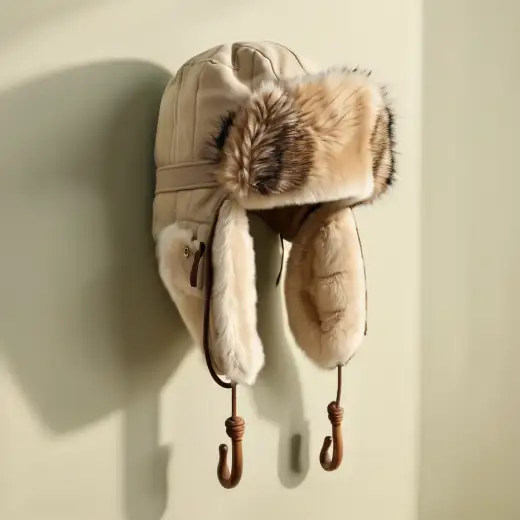
A warm hat with flaps that fold down over the ears, the chief defender against frost and, by a fond saying of Cheremsha the mascot, a reliable way to bring your thinking speed back down to plan. In one of these you won't go tearing off headlong or make any hasty blunders: the ushanka wraps up not only your head but your whole fidgety temperament.
A hat that hugs your head
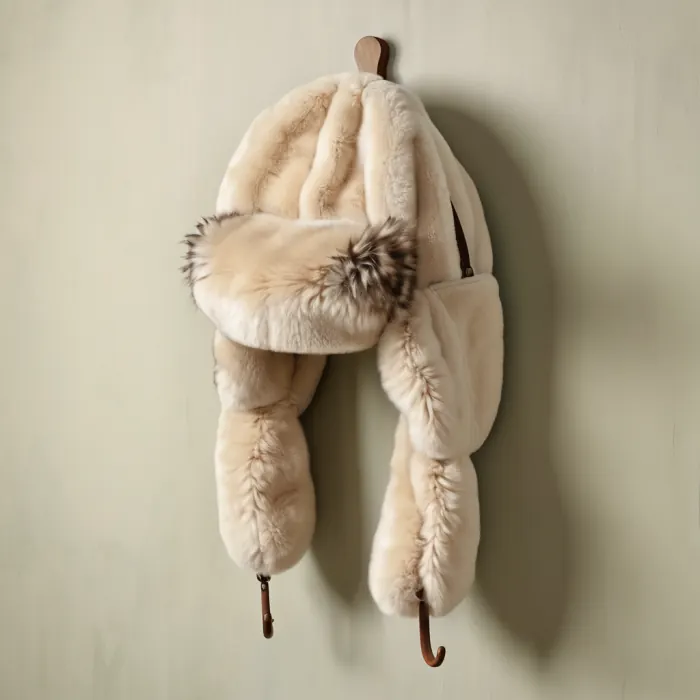
The ushanka is built with a disarming simplicity and thoroughness. The rounded crown sits snug on the top of your head, and at the sides and back hang those famous ears, wide furry flaps you can lower and tie under your chin or raise and fasten up top. At the front there's usually a small brim or band that shields your forehead from the wind.
With the ears down and tied, the ushanka hugs your whole head: cheeks, temples, the back of the neck, all of it tucked away in warmth. Only your face is left out, and even that just halfway. In a hat like this, frost stops seeming like an enemy and turns into plain weather beyond the edges of a cozy fur cocoon.
That thoroughness is the ushanka's main trait. It doesn't show off, doesn't try to be light or elegant. Its job is to warm you honestly and completely, and it does that job so well you forget about the cold for the whole long winter road.
Honest warmth, no tricks
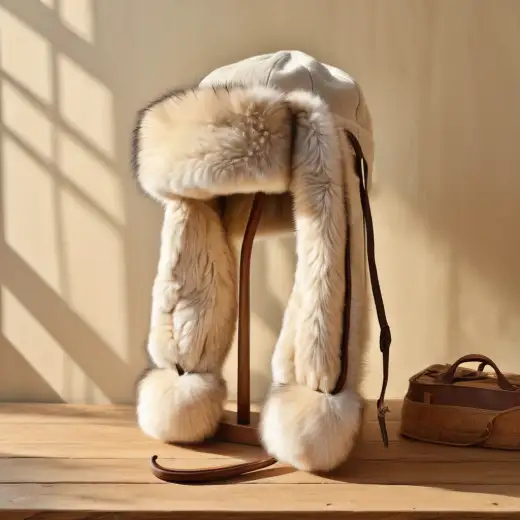
Some hats are pretty but cold: put one on and you look smart, while ten minutes later your ears are falling off in the frost. The ushanka is built the exact opposite way. It may look a little silly, lend your face a guileless expression, but it warms you so well that in the bitterest cold you stay calm and unruffled.
This is honest warmth, no tricks at all. The ushanka doesn't promise what it can't deliver, and it doesn't take back what it gave. Ears down, it's warmer; ears up, a touch cooler; ties undone, you hear the world around you; ties knotted, you sink into cozy quiet. It all works plainly, in a human way, with no cunning.
The fur or fur trim inside finishes the job. Press a cheek against it at a stop while waiting for the bus, and you feel that almost forgotten childhood sense of being safe. As if someone caring had wrapped you up and said: don't hurry, everything will be fine, just don't get cold.
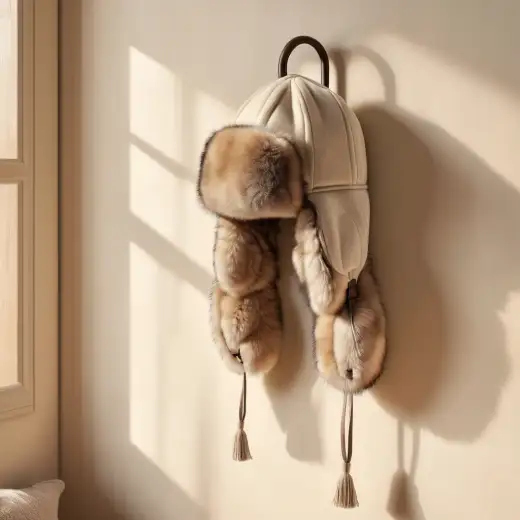
Ears up, ears down: the language of one hat
The ushanka has a silent language all its own, and it speaks through the position of its ears. Ears raised and tied on top means it's not all that cold, the wearer is brisk, ready to listen, hurrying about their business. Ears down and tied firmly under the chin means the frost is sharpening, conversations are wrapping up, and all that's left is to get to somewhere warm.
From this simple sign you could read both the weather and the mood. Undone ties, ears dangling, meant an ambling gait and no rush at all. A tight knot under the chin meant the wearer was focused, set on their goal, and slightly cross with the frost. The hat reported on its owner's state, without a word, more than the owner was ready to admit.
And you could lower the ears one at a time, which looked especially endearing: one ear out to hear your companion, the other hidden from the wind. There was so much that was alive and human in that asymmetry that the ushanka seemed almost a party to the conversation.

Companion of long winters and slow walks
The ushanka was no hat for short dashes. People put it on for the long haul, for an unhurried road across a snowed-in yard, for standing in line under falling snow, for sledding until the very dusk. It was suited to a serious winter, the kind you can't wait out but have to live through day by day.
It was good for walking slowly. A quick pace in an ushanka somehow never quite worked: the warmth invited a steady stride, the fur on the ears muffled the fuss, and the ties under the chin reminded you that sharp movements were out of place here. A person with the ushanka's ears down would slow their pace without meaning to and begin to notice the patterns of frost, the squeak of snow, the curl of smoke over the rooftops.
So the hat turned winter from a tiresome nuisance into a special time of leisurely watching. There was nowhere and no reason to hurry, the frost dictated its own calm rhythm anyway, and the ushanka obediently kept it, guarding you against any attempt to work up a heat too soon.
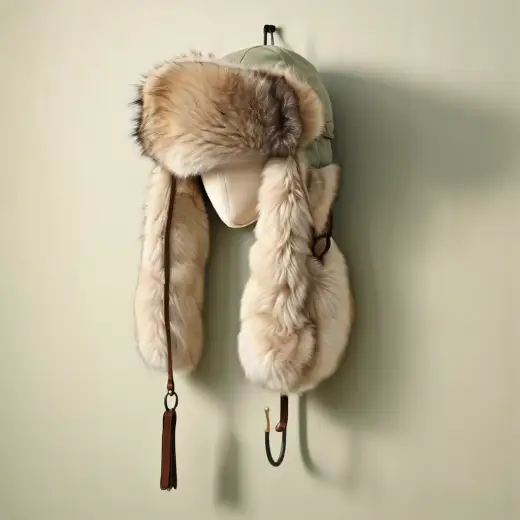
Brings your thinking speed back down to plan
In the warm folklore of the No Rush Factory, the ushanka has a special role, one dreamed up with a smile. They say that, by the saying of Cheremsha the mascot, putting on an ushanka brings your thinking speed back down to plan. It sounds like a joke, but tucked inside the joke is an observation: in a hat this warm and thorough, it's simply impossible to fidget and dash about.
With the ears down, the world is a little muffled, warmth wraps around you, and feverish thoughts slow on their own to a calm, even pace. No faster than needed, no slower than is due, exactly at plan tempo, just the way the rabbit with a lion's heart likes it. A head wrapped in fur is in no hurry to make hasty decisions.
That's the secret use of the ushanka for anyone fighting the fuss. It doesn't only warm your ears, it cools your fever. Put it on and you understand there's nowhere to run headlong, that matters can wait, that first you should calmly get there and only then sort things out. The best hat against hurry is the one in which hurrying is simply too much bother.
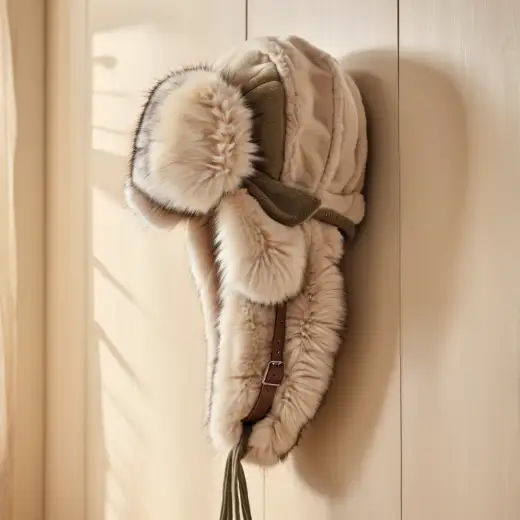
Coziness you wear on your head
The ushanka belongs to that rare category of things that give not just warmth but a sense of home away from home. In it, every snowbank grows a little friendlier, every bus stop more bearable, every wind weaker. It's a portable little piece of warmth that's always with you, the moment you lower the ears and pull the ties tight.
Taken off in a warm room, the ushanka reminds you of itself at once with flattened hair and flushed cheeks, a sure sign that it's winter outside and that inside you now it's good and calm. People set it on a shelf by the door, and it dries there, giving off a faint frosty freshness, getting ready for another unhurried outing.
There's a special tenderness in things that look after us silently and reliably. The ushanka is exactly that. It asks for no thanks, never truly goes out of fashion, and is always ready to hug a chilled head once more with its warm ears.
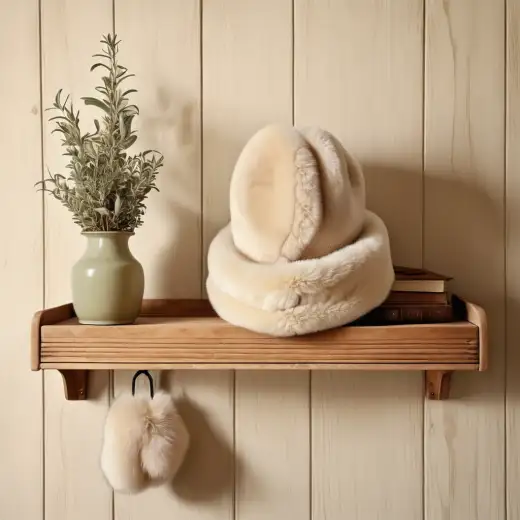
A memory of warmth and calm
Catch sight of an old ushanka on a coat rack or in a wardrobe and your heart warms at once. You remember the squeak of snow underfoot, breath fogging in the air, the long road home at dusk, a grandmother's order to tie the ears tighter. This hat keeps whole winters in its fur, whole childhoods, whole unhurried years.
Maybe that's why an ushanka is so hard to throw out, even when it's worn and gone gray with age. Living in it is not only warmth but the memory of those who tied its ties, and of that calm rhythm of life when frost was a reason not to hurry but to make your way and warm up at a steady pace.
And so it turns out that a simple warm hat with fold-down ears is wiser than many complicated things. It warms your head, reins in the fuss, and quietly reminds you of the main rule of a cozy life: don't hurry, wrap up well, and walk through any winter at your own calm, on-plan pace.